
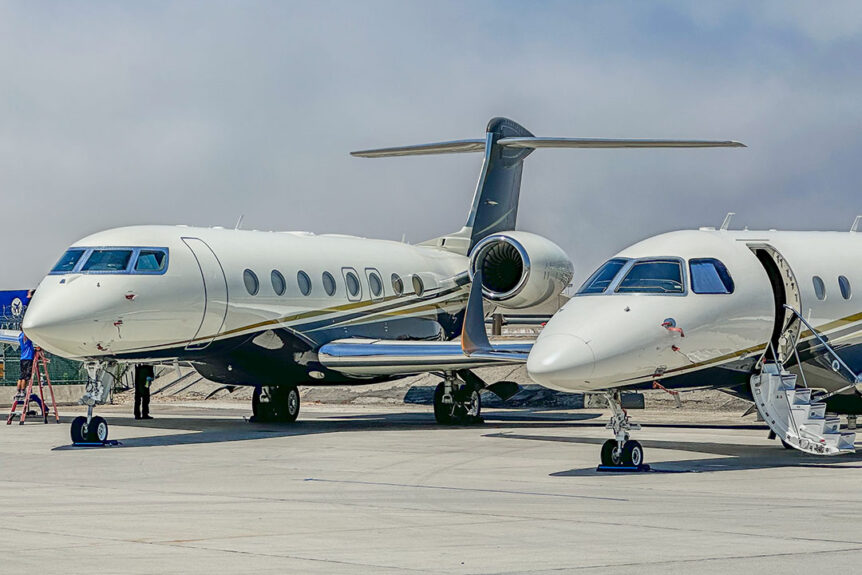
Super Bowl LX private jet departures created one of the most concentrated business aviation surges the San Francisco Bay Area has ever experienced. Within two hours of the Seattle Seahawks defeating the New England Patriots on February 8, 2026, at Levi’s Stadium, 95 private jets had departed five regional airports.
By early Monday morning, that number had climbed to 136 departures, a staggering 1,136% increase over the same window the previous Sunday, when the combined total across those airports averages roughly 11 aircraft.
Airport Breakdown and Top Destinations
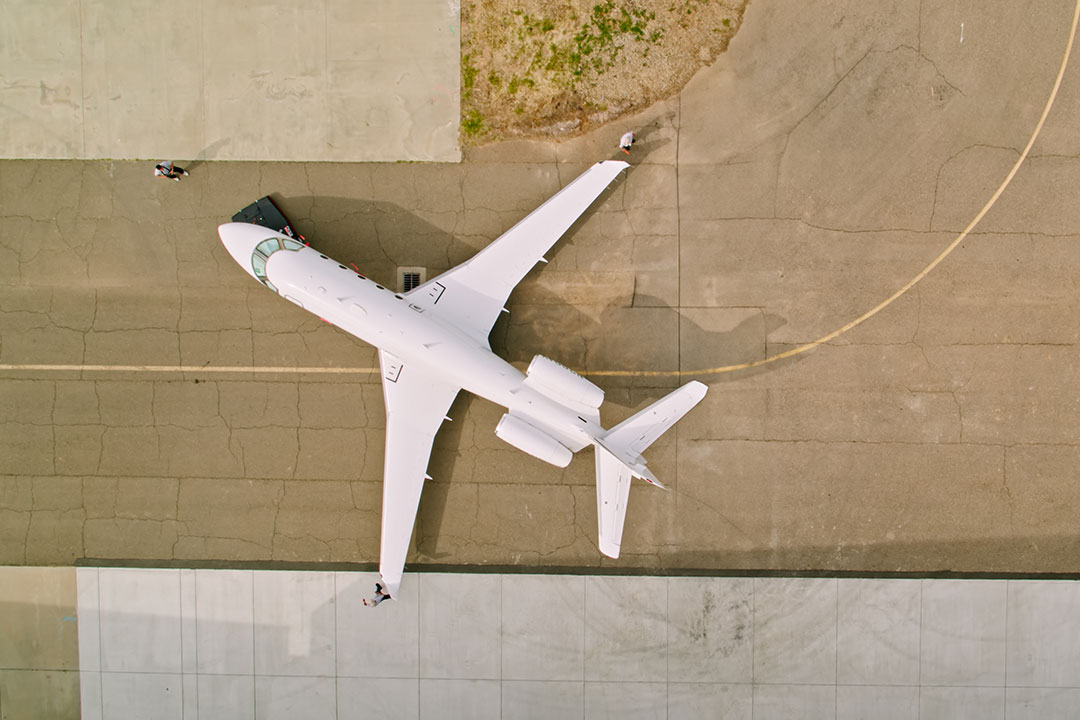
A private jet aircraft is positioned on the tarmac by the ground crew.
Oakland San Francisco Bay Airport (OAK) led all facilities with 52 departures, accounting for 38% of the total. Its strong FBO infrastructure and distance from commercial congestion made it a natural pressure valve for post-game traffic.
San Jose Mineta International (SJC), located just 10 minutes from the stadium, handled 43 departures. SFO contributed 19 movements, while Livermore and Hayward, airports that typically record little to no Sunday evening business jet activity, absorbed 14 and 8 departures respectively.
Oakland alone logged approximately 1,230 combined private jet arrivals and departures from Wednesday through early Monday morning. The total underscores how heavily the region’s secondary airports were utilized throughout Super Bowl week.
Los Angeles emerged as the top post-game destination, with 15 aircraft heading south. Van Nuys Airport (VNY) recorded the highest number of individual arrivals. Las Vegas followed closely with 14 flights.
Most aircraft remained within the United States. Several traveled internationally to destinations including Vancouver, Mexico City, and parts of South America. One Nike-registered Gulfstream G650 was tracked crossing the Atlantic.
Celebrity Departures and the Lead-Up Surge
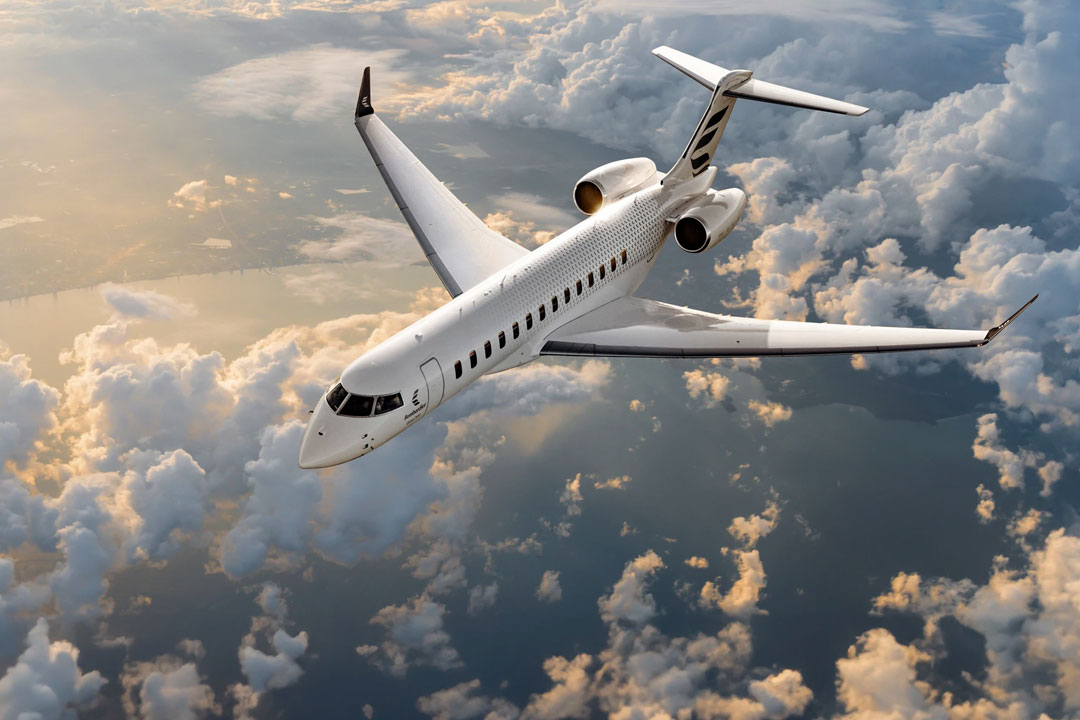
Bombardier Global 7500 | Photo: bombardier.com
Jay-Z and Beyoncé were among the earliest high-profile departures. Their Bombardier Global 7500, registered to a Roc Nation-linked holding company, departed for Van Nuys less than an hour after the final whistle. The Global 7500 is one of the longest-range business jets currently in production and is capable of flying more than 7,700 nautical miles nonstop.
Kim Kardashian followed roughly two hours later aboard a Gulfstream G650 linked to the Kardashian family, also bound for Van Nuys. She had been photographed earlier in the week alongside Formula 1 driver Lewis Hamilton.
The post-game exodus was only part of the story. The buildup was equally dramatic.
JetSpy, which tracks US-registered aircraft, recorded 914 business jet arrivals into the Bay Area between Wednesday and Saturday alone. Friday marked the peak arrival day and logged nearly 90% more traffic than a typical Friday. When international and non-US registered aircraft are included, total inbound movements tied to the event exceeded 1,000 flights. For several days, the Bay Area became one of the busiest business aviation hubs in the country.
Commercial Airlines and the Environmental Backlash
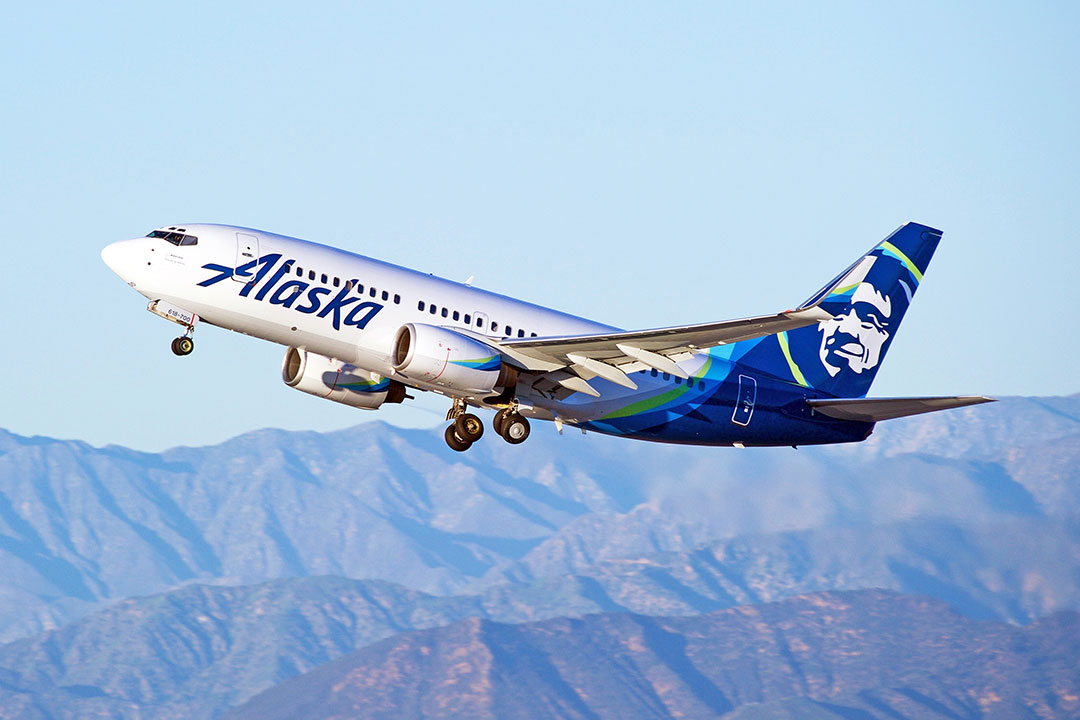
Alaska Airlines Boeing 737-790(WL) aircraft is airborne as it departs Los Angeles International Airport. | Photo: Philip Pilosian
Commercial carriers responded at scale as well. Alaska Airlines added 16 round-trip flights between Seattle and the Bay Area following the Seahawks’ victory. JetBlue launched a special nonstop service between Providence, Rhode Island, and San Francisco, a city pair with no prior scheduled service, created specifically for Super Bowl weekend demand. American Airlines added more than 10,000 seats to and from San Jose across its network.
Together, the commercial and private aviation response illustrates how thoroughly the Super Bowl reshapes regional air travel in the days surrounding kickoff.
The visibility of nearly 100 private jets departing one of America’s most environmentally conscious states drew predictable criticism. Images of aircraft lined wingtip to wingtip across Bay Area ramps circulated widely on social media, reigniting debate over the carbon cost of elite event travel.
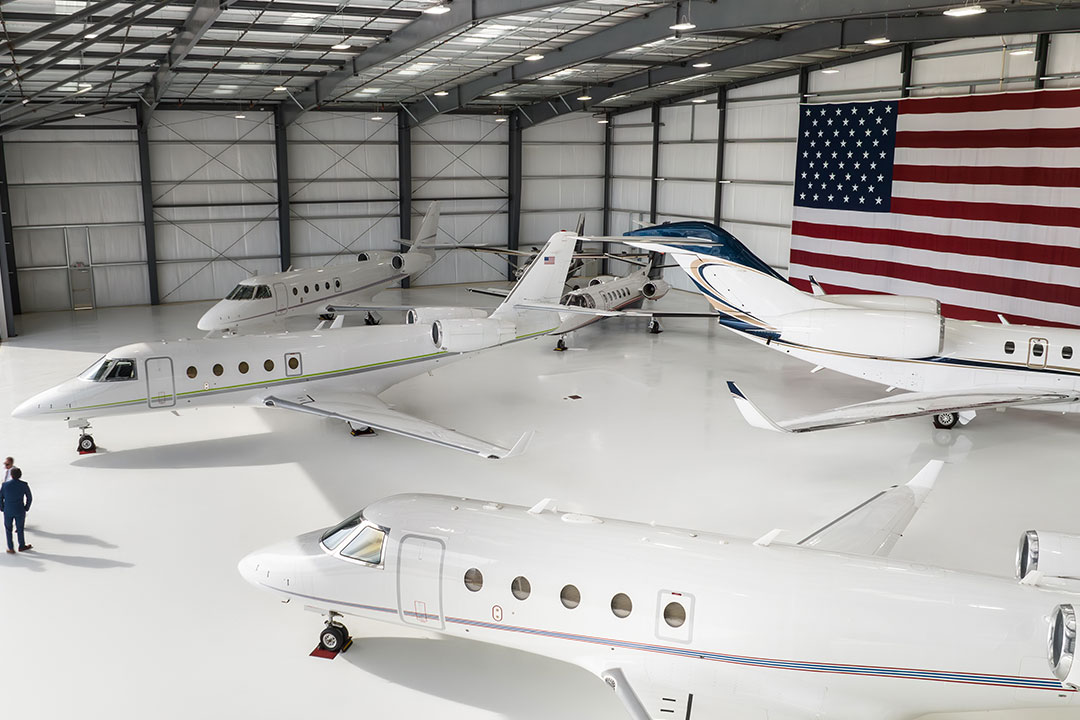
An aircraft hangar filled with luxury, private planes.
Private jets emit significantly more CO2 per passenger mile than commercial flights. The contrast between California’s environmental posture and the scale of the private aviation surge did not go unnoticed. Residents near departure corridors described an unfamiliar late-night roar overhead, a tangible reminder of the event’s travel footprint.
The 1,136% spike in business jet departures following Super Bowl LX is more than an aviation anomaly. It reflects how America’s largest sporting event has evolved into a convergence point for sports, entertainment, and corporate leadership operating on highly compressed schedules.
For many attendees, private aviation removes layovers, fixed departure windows, and terminal congestion. It allows them to remain through the final whistle and be home or at their next engagement by morning. The fact that the Bay Area’s five-airport network absorbed the surge with minimal disruption, distributing overflow traffic to Livermore and Hayward on a Sunday night, highlights the operational flexibility built into today’s business aviation infrastructure.