
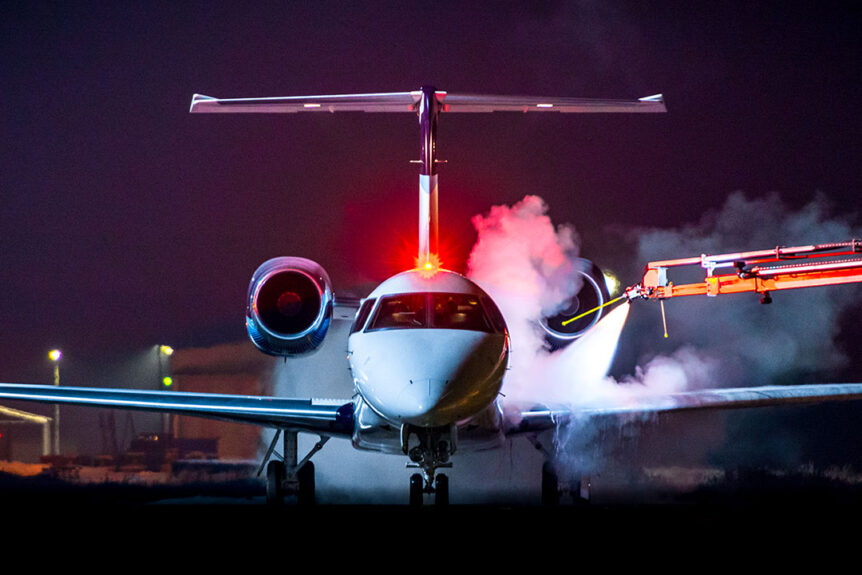
Winter weather does not have to derail a private jet itinerary, but it does change how flights are prepared and timed. Deicing is a safety-critical process that removes or prevents ice and snow accumulation, helping ensure the aircraft meets performance requirements for takeoff and safe flight.
Understanding what drives winter delays and how experienced operators plan around them can help you travel with more certainty during peak cold-weather months.
What “deicing” and “anti-icing” mean in private aviation
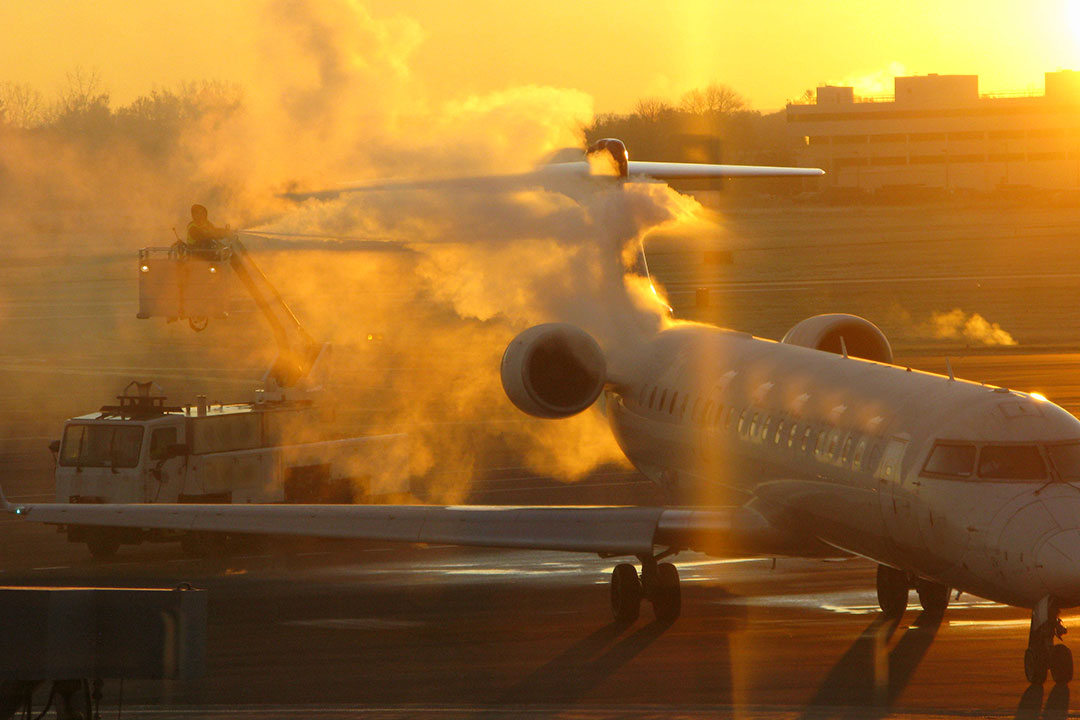
Private jet aircraft getting sprayed with de icing fluid
In aviation, deicing removes existing contamination like snow, slush, or ice. Anti-icing applies a protective fluid layer designed to prevent re-freezing or further accumulation for a limited period. The FAA’s ground deicing guidance emphasizes that aircraft should not take off with frost, ice, or snow contamination on critical surfaces.
- Safety baseline: contaminated wings can reduce lift and increase drag, impacting takeoff performance and controllability.
- Regulatory expectation: operators must ensure critical surfaces are free of contamination before departure under ground icing conditions.
How the FBO deicing process works and what affects timing
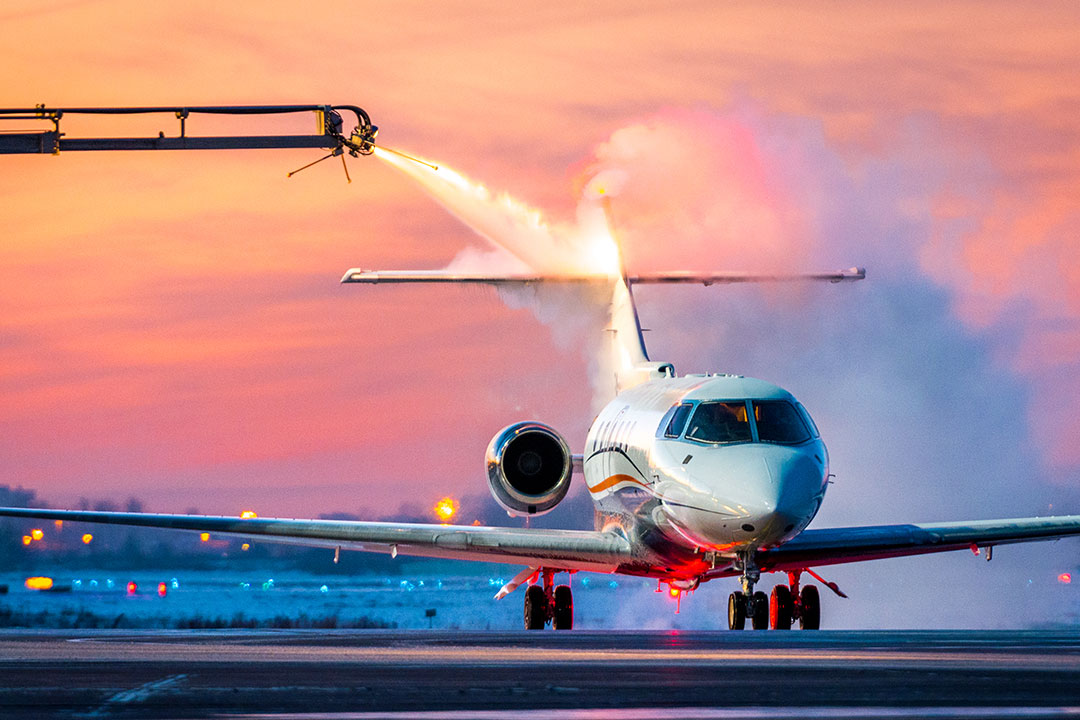
Deicing application to a private jet’s tail.
At many airports, deicing is coordinated through the FBO or airport deicing provider. Timing is influenced by precipitation intensity, ambient temperature, aircraft size, and local deicing queue volume. During major winter events, demand can spike and create lines for trucks, pads, or treatment slots.
Typical steps you can expect
- Pre-flight evaluation: crew and ground team confirm contamination level and weather trend.
- Application: heated deicing fluid removes snow and ice, followed by anti-icing fluid if conditions require it.
- Holdover management: crews plan departure to occur within the fluid’s expected protection window (holdover time), which varies by conditions.
What really causes winter delays on a private jet charter
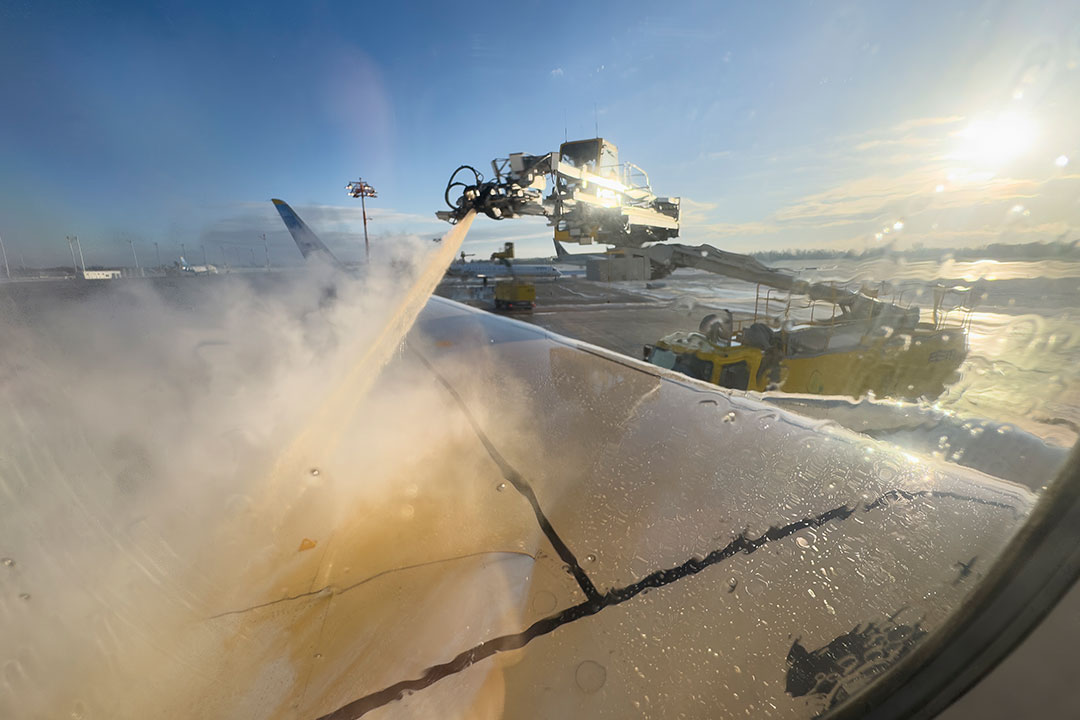
Applying deicing and anti icing fluid on aircraft wing
Private aviation can often reduce delay exposure compared to airline terminals, but winter constraints still apply. The most common delay drivers are operational rather than “just weather.”
- Deicing queues and capacity constraints at busy airports and peak departure banks.
- Airport surface conditions and ATC flow restrictions can reduce departure rates during contamination events.
- Runway braking action and crosswind limitations can reduce usable runway options. FAA runway condition reporting is standardized through RCAM/TALPA concepts.
How to plan winter private jet charter travel with fewer surprises
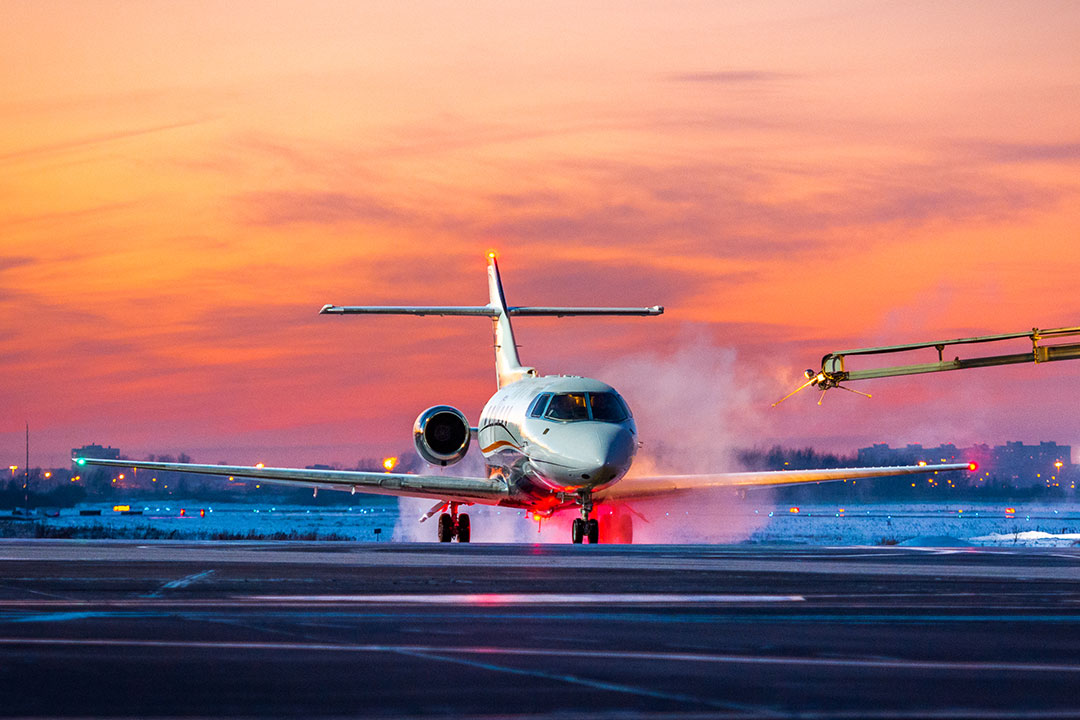
private airplane on the de-icing stand
For high-net-worth travelers, the goal is not only comfort, but schedule certainty. The best winter outcomes typically come from proactive planning that accounts for deicing lead time, alternate airports, and aircraft capability.
Practical planning strategies
- Build realistic buffers: in active snowfall, a modest schedule buffer can help absorb deicing and taxi delays without cascading impacts.
- Consider alternate airports: nearby reliever airports may have shorter deicing queues and faster ramp access, especially in metro areas.
- Match aircraft to mission: performance margins and approved equipment matter more in winter operations and icing risk management.
- Coordinate arrival logistics: ensure ground transportation has winter contingencies, including driver standby and flexible pickup windows.
Aircraft and cabin considerations that matter in cold weather
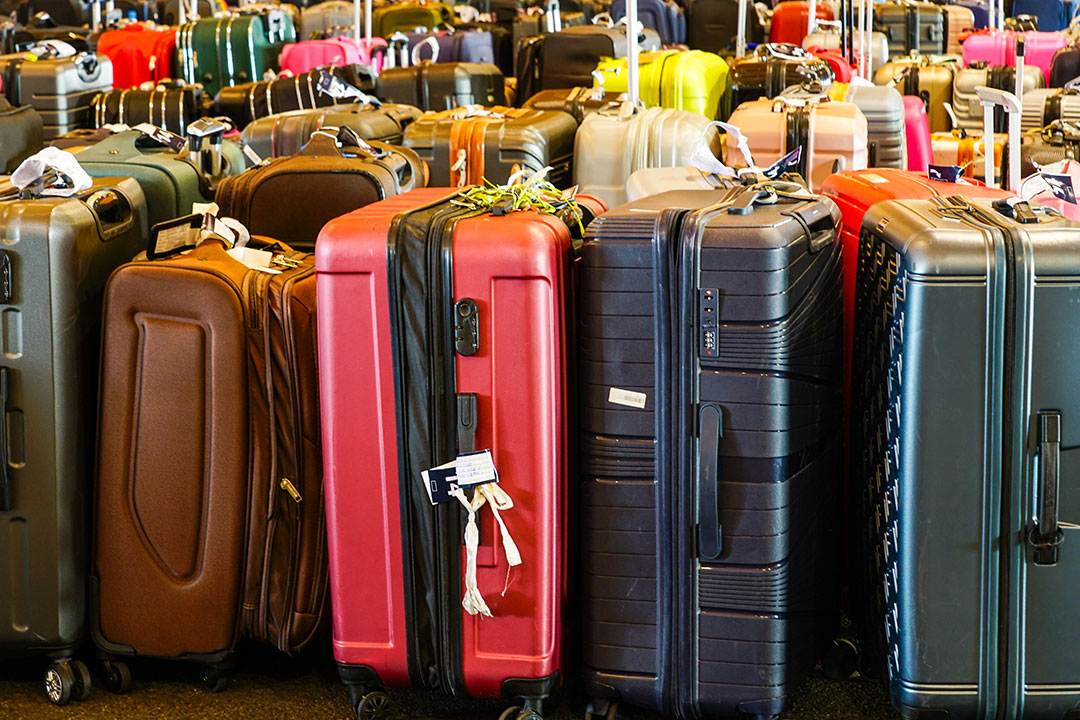
Luggage piles up.
Winter is a strong time to choose the aircraft with the right balance of range, runway performance, and passenger expectations. Differences in cabin size and baggage capacity can be especially noticeable when traveling with ski gear or winter luggage, while conservative planning is informed by FAA icing guidance.
- Light jets: efficient for short hops, often ideal for quick regional trips when runway lengths and payload allow.
- Midsize and super midsize jets: strong option for winter business travel and ski market routes, often balancing range with comfortable cabins.
- Large cabin jets: best for long-range international missions and travelers prioritizing space, onboard rest, and extended-range planning.
Plan your winter travel with Flex Air Charters
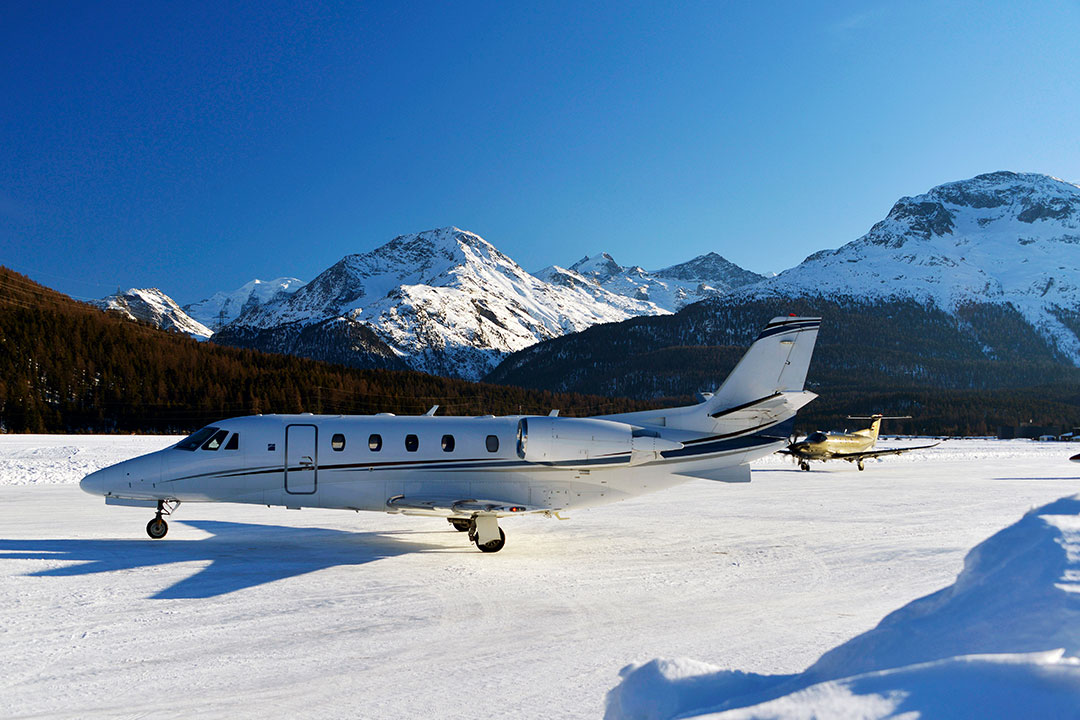
Flex Air Charters can plan and coordinate your winter private jet travel.
Flex Air Charters helps clients fly confidently through winter by pairing each mission with the right aircraft, routing options, and real-time operational coordination. If you are planning holiday travel, ski-season weekends, or time-sensitive business trips, our team can advise on winter-ready scheduling, alternate airport strategies, and aircraft selection to keep your itinerary moving.
- Request a tailored quote based on your preferred departure window and destination.
- Ask about alternate airport options to reduce deicing and congestion risk.
- Coordinate luggage and special items like skis and winter gear in advance.
Contact Flex Air Charters today to plan your next winter private jet charter with confidence.