
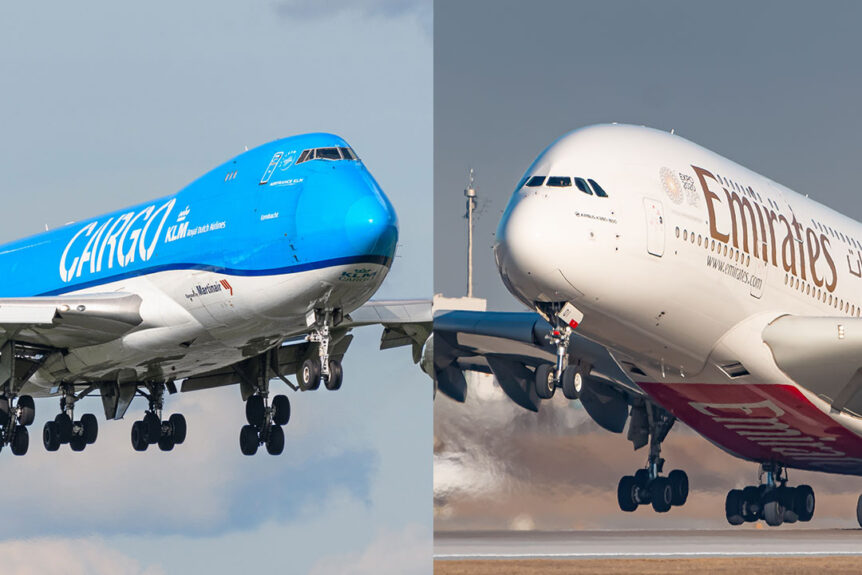
The Boeing 747-8 vs. Airbus A380 rivalry defines modern aviation’s most iconic showdown. These twin giants dominate discussions about performance, passenger comfort, and operational efficiency, yet embody radically different design philosophies—the 747-8 prioritizing flexibility, while the A380 pushes the limits of sheer capacity.
As the largest variants of their legendary families, the Boeing 747-8 vs. Airbus A380 comparison highlights a pivotal divide: versatility versus volume in long-haul air travel.
A Brief History of the Boeing 747-8
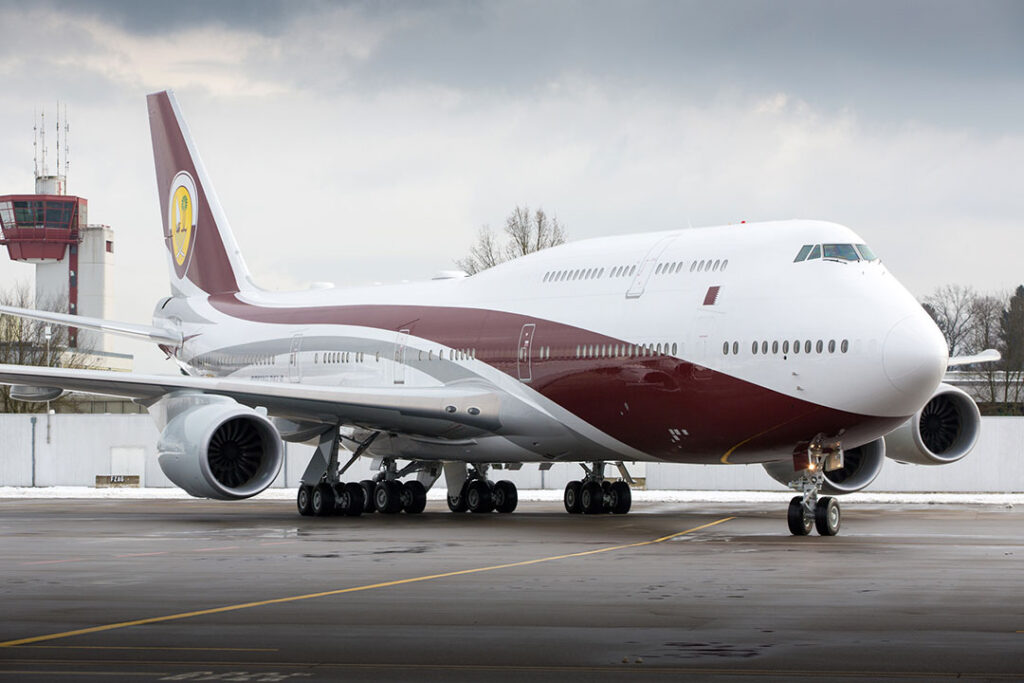
Boeing 747
The Boeing 747-8, introduced in 2012, is the latest and largest iteration of the legendary 747 series—the original “Queen of the Skies,” which first flew in 1969. Known for its distinctive hump-backed design, the 747 revolutionized long-haul travel with its partial upper deck.
The 747-8 builds on its predecessor, the 747-400, with a stretched fuselage, advanced aerodynamics, and more efficient General Electric GEnx-2B67 engines. Boeing designed this model to compete with larger aircraft like the A380 while retaining the 747’s versatility—making it suitable for both passenger and cargo operations.
A Brief History of the Airbus A380
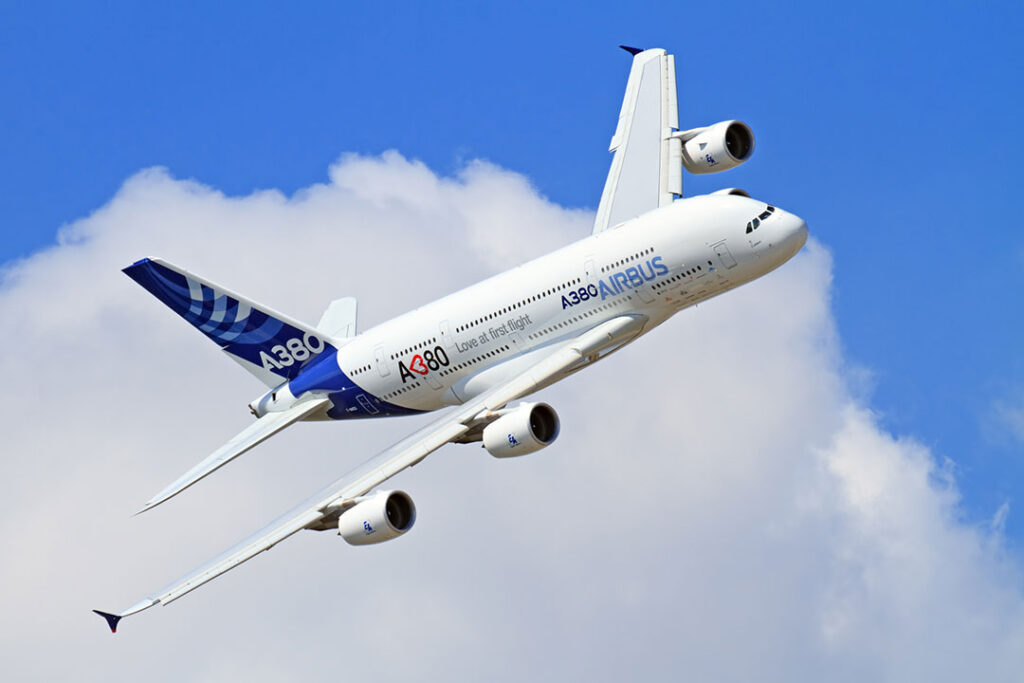
Airbus A380
In contrast, the Airbus A380 was developed as a bold challenge to Boeing’s dominance in long-haul aviation. First delivered in 2007, it remains the world’s largest passenger airliner, featuring a full-length double-deck layout that can seat over 850 passengers in high-density configurations.
Airbus envisioned the A380 as the future of high-capacity air travel, targeting major international hubs. However, its enormous size posed challenges, including limited airport compatibility and shifting airline preferences toward smaller, more fuel-efficient jets. Despite its technological brilliance, Airbus ended production in 2021 after delivering just 251 units.
Design and Structural Differences
The 747-8 and A380 take fundamentally different approaches to maximizing space and efficiency:
Boeing 747-8 Design Highlights
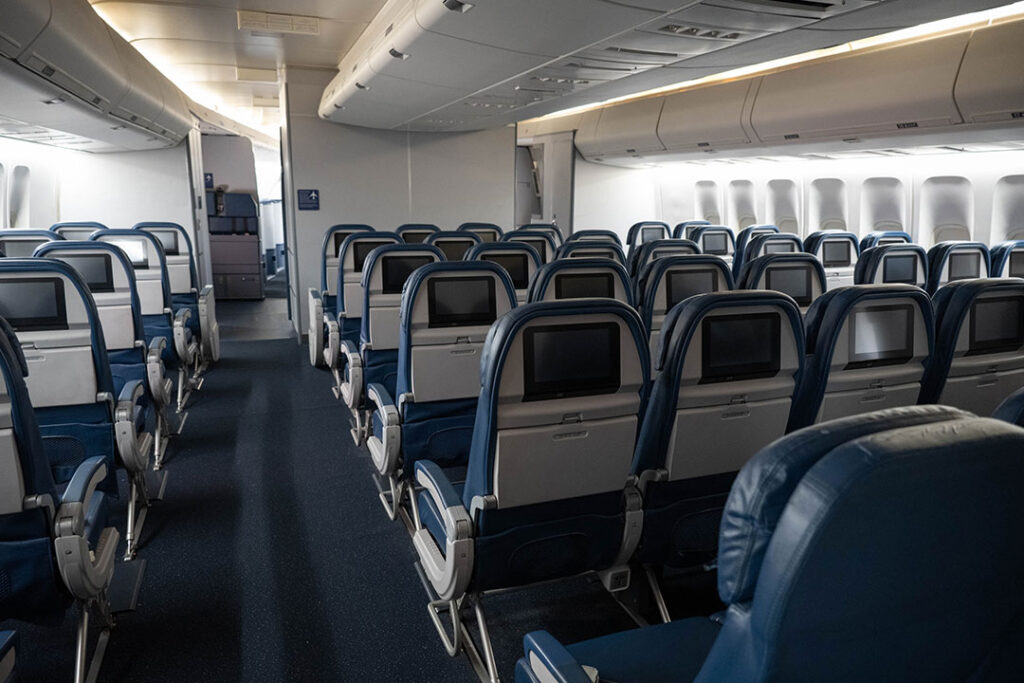
Economy Class seating onboard a Delta Air Lines Boeing 747
- Partial upper deck (retaining the classic 747 silhouette)
- Four GE GEnx-2B67 engines (improved fuel efficiency)
- Raked wingtips for better aerodynamics
- More cargo-friendly (especially in freighter variants)
Airbus A380 Design Highlights
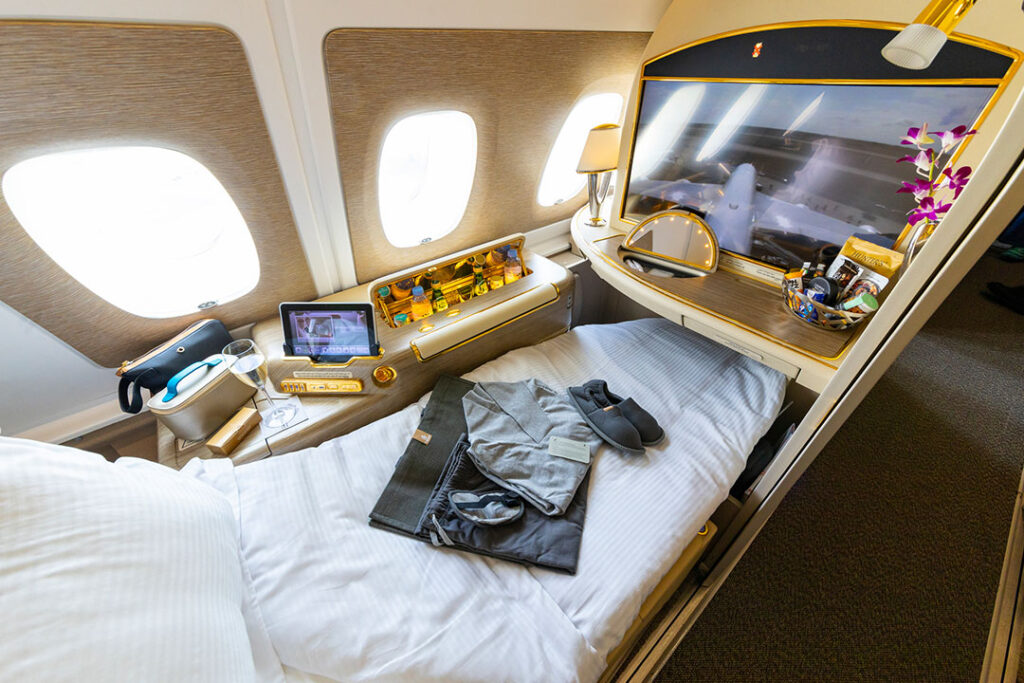
Luxurious travel style onboard of Emirates Airbus A380 in First Class
- Full double-deck design (unmatched passenger volume)
- Four Rolls-Royce Trent 900 or GP7200 engines
- Massive wingspan (261 ft) with wingtip fences
- Exceptionally quiet and spacious cabin (allowing for premium amenities like bars and lounges)
Passenger Capacity and Cabin Layout
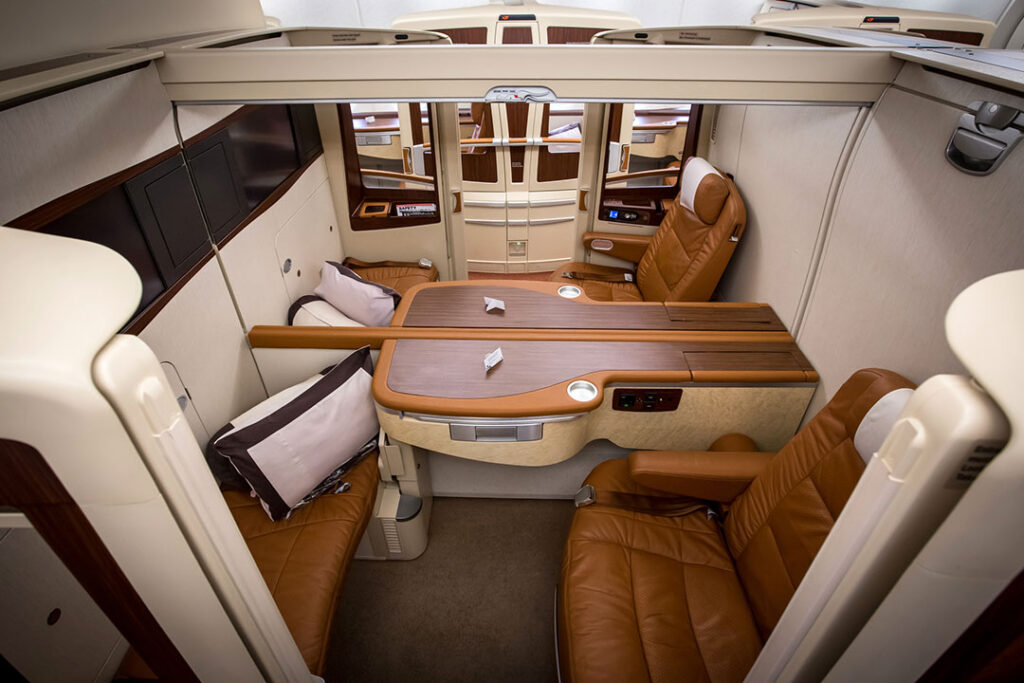
Singapore Airlines Airbus A380 First Class Suites
While the A380 dominates in raw capacity, airlines often configure it for luxury rather than maximum seating:
| Aircraft | Typical 3-Class Seating | Maximum Capacity |
|---|---|---|
| Boeing 747-8 | ~467 passengers | ~605 passengers |
| Airbus A380 | ~555 passengers | Up to 853 passengers |
The A380’s spacious interior allows for premium features like first-class suites, onboard lounges, and even showers—something the 747-8 can’t match. However, the 747-8’s flexibility makes it more adaptable for mixed passenger-cargo operations.
Cargo and Range Comparison
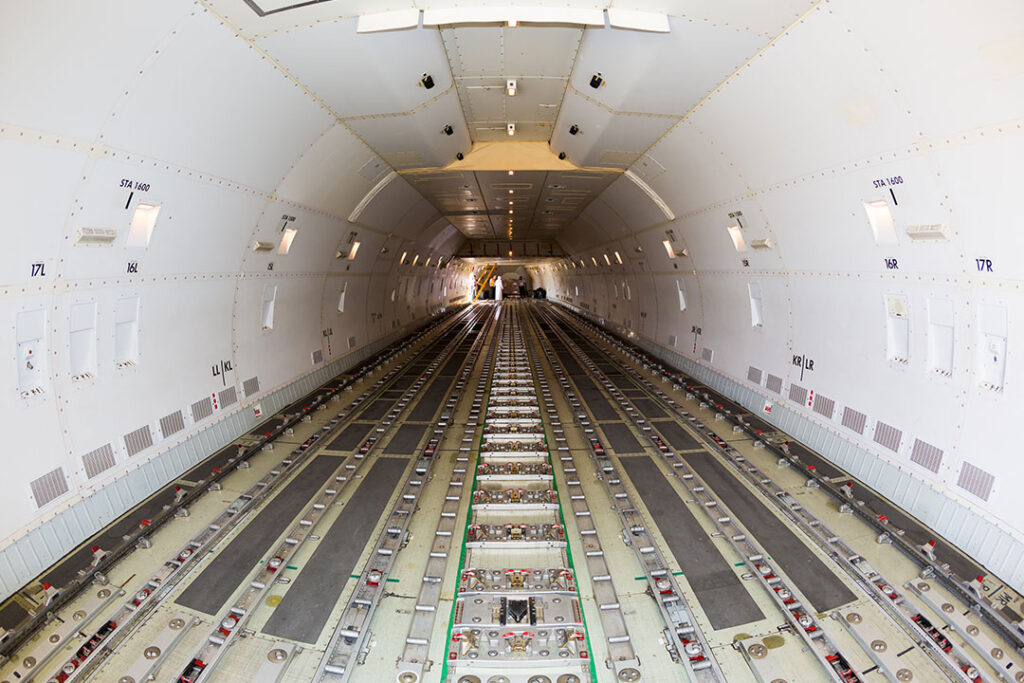
Transport Boeing 747 Cargo hold
| Metric | Boeing 747-8 | Airbus A380 |
|---|---|---|
| Range | 7,730 nmi (14,320 km) | 8,000 nmi (14,800 km) |
| Cargo Volume (Passenger Variant) | 5,705 cu ft (161.5 m³) | 6,000 cu ft (170 m³) |
| Cargo Volume (Freighter Variant) | 30,288 cu ft (857 m³) | N/A (No dedicated freighter) |
While the A380 offers slightly better range, the 747-8F (freighter variant) is a cargo powerhouse, ensuring its continued relevance in logistics.
Operational Efficiency and Airport Compatibility
- A380: Requires specialized airport infrastructure (reinforced runways, expanded gates), limiting its usability.
- 747-8: Fits into existing airport layouts with minimal modifications, reducing operational costs.
Additionally, the 747-8 has lower maintenance and fuel costs compared to the A380, making it more economical for airlines that don’t need ultra-high passenger capacity.
Airline Adoption and Market Performance
- Airbus A380: Struggled with low demand, leading to production ending in 2021.
- Boeing 747-8: Passenger version discontinued in 2022, but the freighter variant remains popular (used by UPS, Lufthansa Cargo, and Cargolux).
Future Outlook
With airlines favoring twin-engine jets (Boeing 787, Airbus A350) for fuel efficiency, the era of four-engine giants may be fading. Yet, the 747-8 and A380 will remain legendary—symbols of an ambitious age in aviation history.
Boeing 747-8 vs. Airbus A380: Key Specifications
| Specification | Boeing 747-8 | Airbus A380 |
|---|---|---|
| Length | 76.3 m (250 ft 2 in) | 72.7 m (238 ft 7 in) |
| Wingspan | 68.4 m (224 ft 7 in) | 79.8 m (261 ft 8 in) |
| Max Takeoff Weight | 987,000 lbs (447,700 kg) | 1,268,000 lbs (575,000 kg) |
| Engines | 4 × GE GEnx-2B67 | 4 × Trent 900 / GP7200 |
| Typical Capacity (3-Class) | 467 passengers | 555 passengers |
| Maximum Capacity | ~605 passengers | ~853 passengers |
| Range | 7,730 nmi (14,320 km) | 8,000 nmi (14,800 km) |
Final Verdict
The Boeing 747-8 and Airbus A380 represent two different visions for long-haul aviation:
- 747-8: Flexibility (passenger & cargo adaptability, lower operating costs).
- A380: Sheer capacity (unmatched passenger volume, premium cabin options).
The Boeing 747-8 vs. Airbus A380 debate ultimately reflects aviation’s evolving priorities. While the A380 redefined scale with its double-decker capacity—ideal for congested hubs like Dubai or Heathrow—the 747-8 carved its niche through adaptability, serving both premium passengers and cargo operators. The Boeing 747-8 vs. Airbus A380 comparison also reveals how market forces shifted: airlines now favor efficiency over sheer size, explaining why the A380’s production ended while the 747-8F freighter thrives. Yet both aircraft in the Boeing 747-8 vs. Airbus A380 rivalry achieved legendary status, proving that in aviation, there’s no single path to greatness—only trade-offs between ambition and practicality.