

ZeroAvia, a company dedicated to the environment, will build a research and development center to create hydrogen-powered aviation near Seattle, just north of Everett’s Paine Field. Seattle is known for aviation giant Boeing, but a recent entry to the field, MagniX, which develops electric motors, has landed there, too.
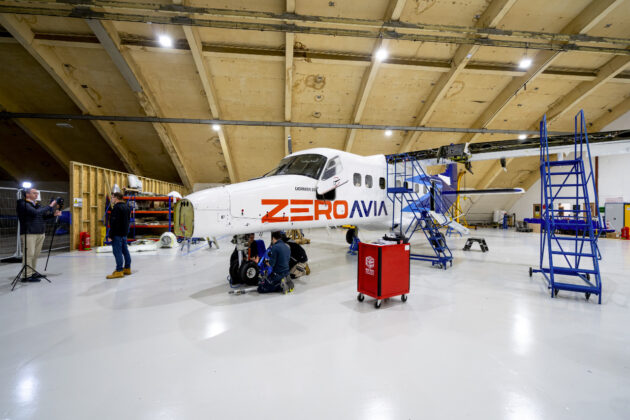
ZeroAvia conducting flight tests in the UK with this 20-seat, hydrogen-electric powered plane in early 2022. (ZeroAvia Photo)
Seattle chosen due to aviation history
Backed by Amazon and Alaska Air, ZeroAvia is dedicated to studying and producing hydrogen-powered aircraft. The company hopes to combine hydrogen-fuel cells with electric motors to create zero-emission aircraft. Their zero-carbon-emitting propulsion system took it’s first and only flight so far in 2021. This eight-minute trip was on a Piper plane and took place in England. The company is hoping for longer trips on a larger jet soon.
ZeroAvia chose the Seattle area because it is home to around 500 aerospace companies, and Seattle has a long history in the aviation field, as Boeing launched there in 1916. In the 1960s, Boeing opened its assembly site at Paine Field, a former military base. Boeing has since moved jobs out of state, but other commercial aviation companies have taken up the slack.
Converting Jet to Hydrogen Power
The goal of ZeroAvia’s new facility is to convert a 76-seat Q400 plane, donated by Alaska Airlines, to hydrogen power. This is a huge step compared to the six-seat Piper they flew last year. Alaska Airlines chose to donate the plan to show their support for the development of sustainable energy for the aviation industry.
It will be years before a hydrogen-powered plan will be ready to carry passengers, and it will take millions of dollars to create and produce. United Airlines and Alaska Air have both promised to donate $35 million to the company. Funding is now at $115 million and includes funds from Bill Gates’ Breakthrough Energy Ventures, Amazon’s Climate Pledge Fund, and more.
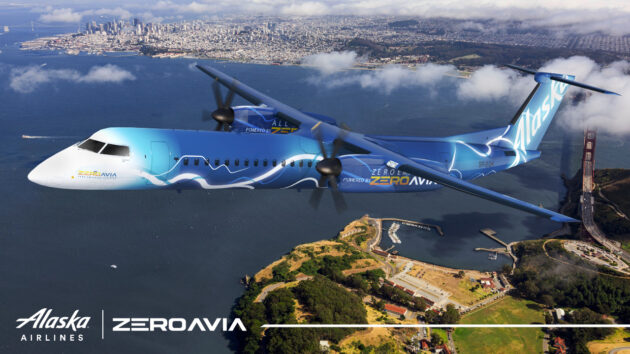
An artist’s rendition of an Alaska Airlines airplane with ZeroAvia’s hydrogen electric powertrain. (Alaska Airlines and ZeroAvia Image)
Other companies are in the race
ZeroAvia isn’t the only company studying hydrogen-powered aviation. Universal Hydrogen is hoping to convert a regional jet to hydrogen power. The CEO of this company estimates that it will take about $300 million to receive certification of his jets. The research and development of this plane is being done at Moses Lake in central Washington.
These companies have problems beyond just the technological aspects of developing these planes. Delivering the hydrogen fuel to airports will require a completely new logistics system and infrastructure. The hydrogen fuel and the systems needed to converge it with electric motors takes up a lot of room on the planes. In fact, when Universal Hydrogen converted the 50-seat jet, they had to remove 10 seats from the plane, severely limiting the amount of passengers it can carry. Because of this, it is unknown if hydrogen-fueled aviation will be able to sustain itself economically.
FlexAir Charters makes flying easy
FlexAir Charters is hoping to one day offer solar and hydro powered aircraft for those who want their flying experience to be environmentally-conscious. The company prides itself on making air charter flights as easy as possible and strives to provide guests with the best flight services in the market. For more information, visit the Web site at www.flexaircharters.com/private-air-charters/air-charter-concierge/.